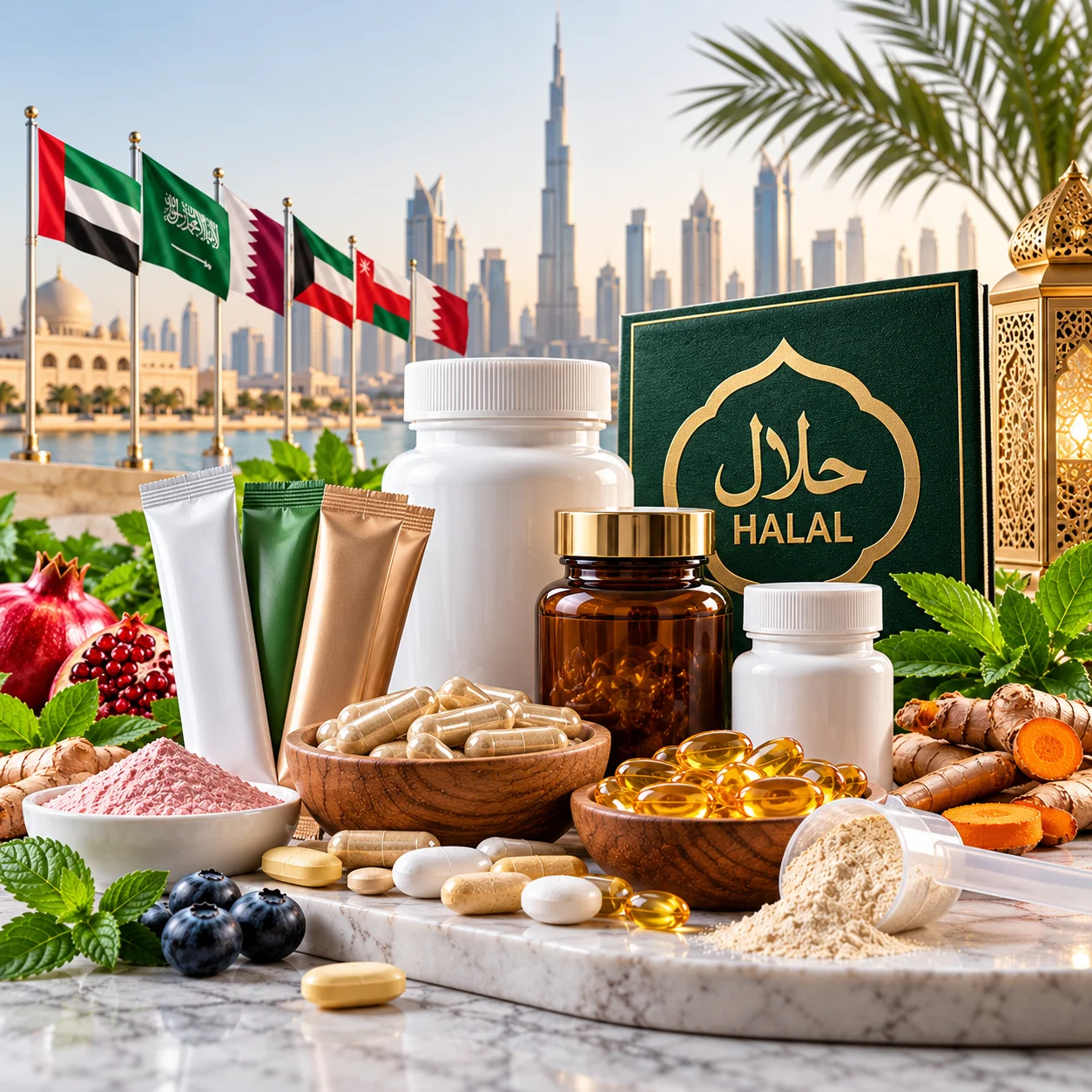
The Gulf Cooperation Council (GCC) is an increasingly important market for nutraceutical and wellness brands. Saudi Arabia, the UAE, Qatar, Kuwait, Bahrain and Oman offer opportunities across pharmacies, distributors, ecommerce platforms and specialized wellness channels.
For companies planning to enter these markets, however, a successful supplement requires more than an attractive formula. Halal requirements, product documentation, labeling, formulation and market-specific regulations should be considered from the beginning.
Why the GCC Matters for Supplement Brands
Consumers across Gulf markets are showing strong interest in vitamins, minerals, sports nutrition, digestive wellness, beauty-from-within and other preventive wellness categories.
At the same time, buyers are becoming more selective.
Importers and distributors may evaluate not only price but also product quality, documentation, manufacturing standards and whether the formulation is appropriate for their market.
This makes manufacturing readiness an important part of GCC expansion.
Halal Goes Beyond the Finished Capsule
For nutraceutical brands, halal suitability should be evaluated across the product rather than assumed from the main active ingredient.
Areas that may require attention include:
- Ingredient origin
- Capsule or softgel shell material
- Flavours and processing aids
- Gelatin sources
- Manufacturing processes
- Supplier documentation
Certification and acceptance requirements can vary by destination, so brands should verify the current requirements for their specific market before launch.
Formulation Should Match the Target Country
A product developed for one market should not automatically be assumed suitable for another.
Ingredient limits, permitted claims, label requirements and product classifications can differ.
Saudi Arabia and the UAE, for example, have their own regulatory systems even though they operate within the broader GCC environment.
This is why brands should identify the target market before finalizing formulation and packaging.
Documentation Matters to Importers
Professional B2B buyers may request technical and commercial documents before approving a supplier.
Depending on the product and destination, these can include product specifications, Certificates of Analysis, manufacturing information, ingredient documentation, stability information and other quality records.
Good documentation makes communication between manufacturer, brand owner, importer and regulatory partner much easier.
Manufacturing Through an Integrated Group
Musani Group operates through specialized healthcare businesses including Modherbs, BioServe Pharma and Elate Pharma.
This provides access to capabilities across nutraceutical contract manufacturing, specialized health products and softgel encapsulation.
For international buyers, access to multiple manufacturing capabilities within one group can simplify product portfolio development.
Explore Musani Group:
https://musanigroup.com/
Build for Export From Day One
The most efficient time to think about export compliance is before commercial manufacturing begins.
Target country, formula, dosage form, packaging, labeling and documentation should be planned as one connected project.
Brands that take this approach can reduce unnecessary reformulation and packaging changes later.
Looking for a manufacturing partner for your GCC-focused nutraceutical brand? Connect with Musani Group to discuss private label, contract manufacturing and export-oriented product development.