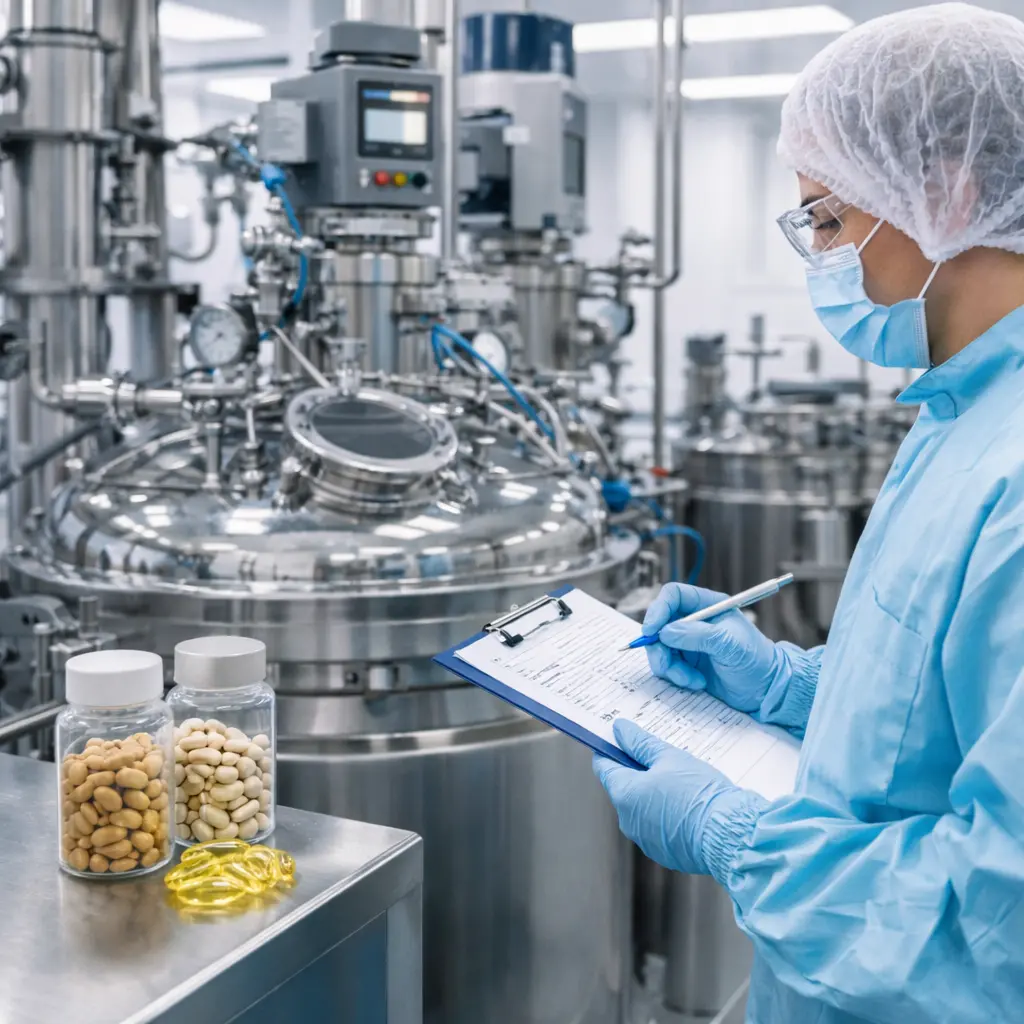
When a customer holds a supplement bottle, they only see the finished product. Behind that bottle is a much longer journey involving raw materials, suppliers, laboratory checks, production records, packaging components and distribution.
Batch traceability connects these steps. It allows a manufacturer to identify where an ingredient came from, which production batch used it, what tests were performed and where the finished products were supplied.
For private label brands, this is not simply paperwork. It is an important part of product quality and business protection.
What Does Batch Traceability Include?
A reliable traceability system starts before production. Each incoming material should have a supplier name, lot number, receiving date and approved specification. Its identity and quality should be checked before it is released for manufacturing.
During production, the manufacturer records the ingredients used, their quantities, equipment details, processing steps, in-process checks and the people responsible for completing or reviewing the work.
The finished batch is then connected with its test results, packaging material, label version, batch number, manufacturing date and distribution records.
FDA dietary-supplement manufacturing guidance requires written master manufacturing records and a batch production record for every manufactured batch. These records are intended to provide complete information about the production and control of the batch.
Why Is Traceability Important for Brand Owners?
Imagine that a packaging supplier reports a problem with one lot of bottle caps. A strong traceability system can help identify which products used those caps. Without clear records, a company may need to investigate or hold a much larger quantity of stock.
The same principle applies to raw materials, printed labels and finished-product testing. Accurate records make investigations faster and allow decisions to be based on evidence instead of guesswork.
Traceability can also support:
- Faster complaint investigations
- Controlled product withdrawals or recalls
- Better inventory management
- More confident buyer audits
- Consistent repeat production
- Clearer communication with regulators and distributors
European food law describes traceability as the ability to follow food and ingredients through production, processing and distribution. The European Commission also identifies it as a foundation for accountability and rapid food-safety responses.
What Should Private Label Buyers Ask?
Before selecting a manufacturing partner, a brand should ask practical questions:
Can every finished batch be linked to the raw-material lots used?
Are approved specifications available for ingredients and packaging?
Does quality control review the batch before release?
Are label versions controlled to prevent the wrong artwork from being used?
Can distribution records show which customer received each batch?
The answers reveal more about a manufacturer than a product sample alone.
Traceability Does Not End After Production
A batch may pass testing but still require proper storage, shipment and distribution control. Temperature, humidity, damaged cartons or incorrect handling can affect quality after the product leaves the factory.
This is especially important for export products that may pass through several warehouses, ports and distributors. The records should create a clear path from the material supplier to the final commercial shipment.
Building Trust Through Documented Quality
Musani Group operates across nutraceutical manufacturing, specialized health products, softgel encapsulation, pharmaceutical trade and exports. Its stated strategy includes vertical integration, quality compliance and stronger supply-chain control.
For international buyers, manufacturing capacity is valuable—but documented control makes that capacity more trustworthy.
A good traceability system does not guarantee that a problem will never occur. It ensures that when a question arises, the manufacturer can find the right batch, review the facts and respond professionally.
Frequently Asked Questions
Is a batch number enough for complete traceability?
No. The batch number must connect with raw-material, production, testing, packaging and distribution records.
Why do buyers request batch documents?
They use them to evaluate consistency, investigate concerns and confirm that the product was manufactured under controlled procedures.
Does traceability help with exports?
Yes. Clear records can support buyer audits, regulatory documentation, complaint handling and supply-chain communication.