Clean label is becoming a basic expectation rather than a small wellness trend. Customers increasingly turn the pack around, read the ingredient list and question unfamiliar colours, sweeteners, fillers and preservatives. For a private label brand, this creates a valuable opportunity—but removing ingredients without understanding their purpose can also damage the finished product.
What Does Clean Label Really Mean?
There is no single formula that automatically makes every supplement “clean.” In practice, the term usually describes a product with a clear purpose, a shorter and understandable ingredient list, transparent sourcing and no unnecessary additives.
Clean label does not mean that every excipient is harmful. It means every ingredient should have a valid reason for being present.
FDA guidance explains that supplement ingredients can include binders, colours, excipients, fillers, flavours and sweeteners. Ingredients outside the Supplement Facts panel generally need to appear in the ingredient statement.
Why Are Excipients Used?
A capsule powder must flow evenly into the filling machine. A tablet needs enough strength to survive coating, packing and transport. A sachet powder must remain free-flowing and mix properly. Excipients may support these functions.
Removing a flow agent without testing can produce uneven capsule weights. Replacing a tablet binder may affect hardness or disintegration. Removing a preservative from a liquid may reduce its stability.
The better approach is not “remove everything.” It is “use only what the formula genuinely needs.”
Five Questions to Ask During Development
Before approving a clean-label supplement, a brand should ask:
- What job does each ingredient perform?
- Can a simpler alternative provide the same function?
- Will the product remain stable throughout its shelf life?
- Does the label clearly disclose all required ingredients?
- Will the formula meet the rules of every target country?
These questions help prevent attractive marketing language from creating technical or regulatory problems.
Clean Label Still Requires Strong Testing
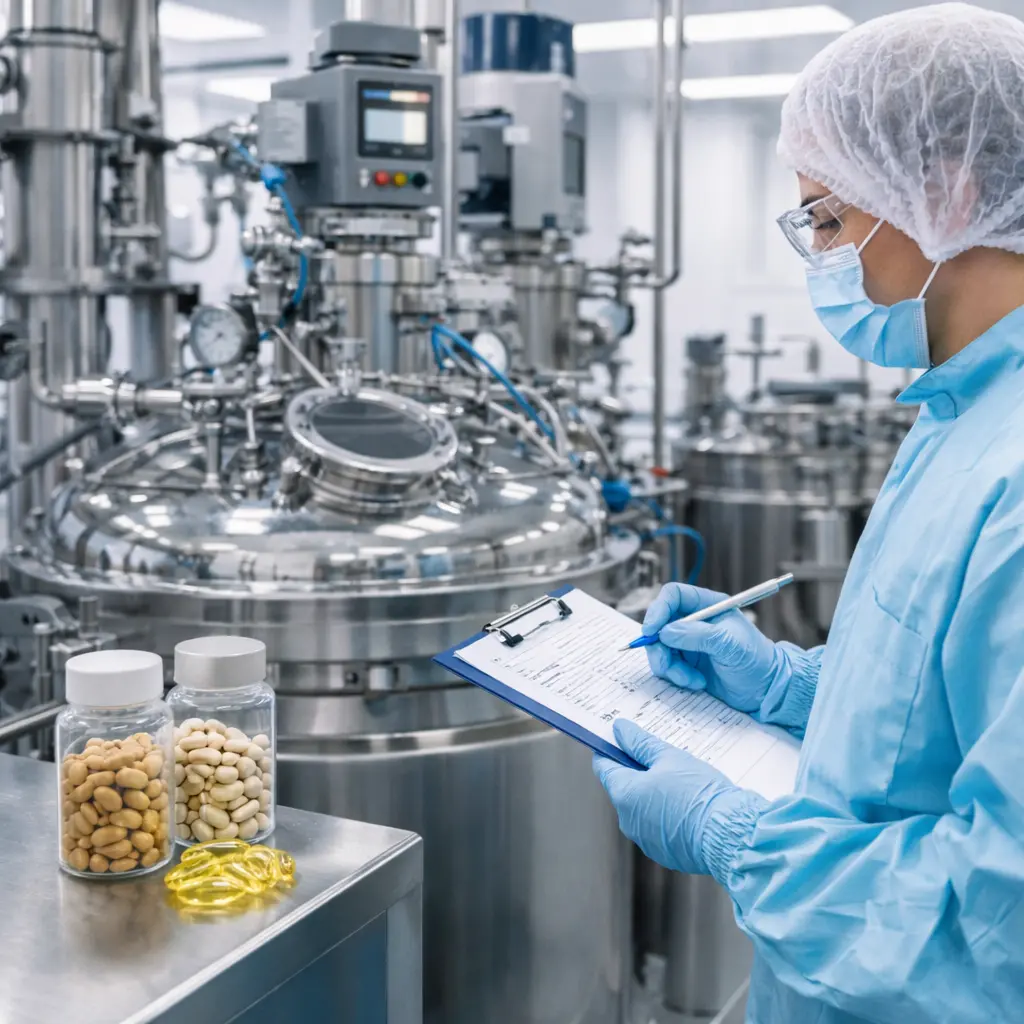
A short ingredient list does not guarantee quality. Raw materials still need identity and purity checks. Finished products still need strength, composition, contamination and stability controls.
FDA’s dietary-supplement manufacturing guidance defines quality around identity, purity, strength, composition and contaminant limits. It also requires quality control review before a batch is released.
For export products, packaging must also protect the formula during transport, changing temperatures and warehouse storage. A natural colour, flavour or botanical extract may behave differently from a synthetic alternative, so reformulation should be validated rather than assumed.
How Can Brands Communicate Honestly?
Avoid vague statements such as “chemical-free,” because all ingredients are made of chemicals. More useful communication includes:
- No artificial colours
- Naturally flavoured
- Vegetarian capsule shell
- Clearly declared sweetener
- Traceable botanical extract
- Tested finished-product potency
Every statement should match the actual formula, documents and destination-market regulations.
Building a Clean-Label Product with the Right Partner
Musani Group presents nutraceutical contract manufacturing through Modherbs and BioServe, alongside specialized softgel capabilities through Elate Pharma. The group also emphasizes quality compliance, vertical integration and international trade experience.
A successful clean-label supplement is not the product with the fewest possible ingredients. It is the product with the right ingredients, a clear label, reliable testing and a format customers can use with confidence.
Frequently Asked Questions
Are all excipients unnecessary?
No. Some support manufacturing, stability, appearance or serving consistency.
Can tablets be made without artificial colours?
Often yes, but coating performance, stability and appearance must be tested.
Does clean label guarantee a better supplement?
No. Product quality still depends on formulation, raw materials, manufacturing controls, testing and honest claims.